
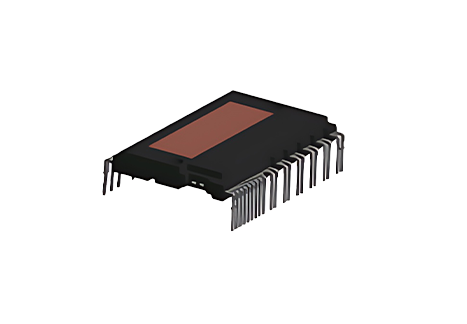
**Inverter Shopping Guide: What Features Matter Most?**
When shopping for an inverter, whether for home, office, or industrial use, selecting the right one can be overwhelming due to the variety of options available. An inverter converts DC (Direct Current) power from batteries or solar panels into AC (Alternating Current) power, which is used by most household and commercial appliances. To make an informed decision, you need to consider several key features. This guide will help you understand the most important factors when choosing an inverter.
---
**1. Power Capacity (Wattage)**
The most critical factor is the inverter’s power capacity, measured in watts (W) or kilowatts (kW). You must determine how much power your appliances require to ensure the inverter can handle the load.
**Steps to Calculate Power Needs:**
1. **List all appliances** you want to run simultaneously.
2. **Check their wattage** (usually found on labels or manuals).
3. **Add up the wattage** to get the total power requirement.
4. **Add a 20-30% buffer** to account for power surges when devices start up.
**Types of Inverters Based on Power:**
- **Small inverters (300W – 1000W):** Suitable for laptops, lights, and small electronics.
- **Medium inverters (1kW – 3kW):** Can power refrigerators, TVs, and fans.
- **Large inverters (3kW – 10kW+):** Ideal for heavy-duty appliances like air conditioners and industrial equipment.
---
**2. Waveform Type: Pure Sine Wave vs. Modified Sine Wave**
Inverters produce different types of AC waveforms, affecting appliance performance and efficiency.
**Pure Sine Wave Inverters**
- **Best for sensitive electronics** (laptops, medical devices, and audio equipment).
- **Smoother and more stable power**, similar to grid electricity.
- **More expensive** but ensures longer appliance lifespan.
**Modified Sine Wave Inverters**
- **Cheaper but less efficient** for sensitive devices.
- **Can cause humming in motors** (fans, refrigerators).
- **Suitable for basic appliances** like lights and resistive loads.
**Recommendation:** If budget allows, always choose a **pure sine wave inverter** for better compatibility and safety.
---
**3. Battery Voltage Compatibility**
Inverters work with different battery voltages, typically **12V, 24V, or 48V**. The choice depends on your power needs:
- **12V inverters (up to 1000W):** Common for cars and small setups.
- **24V inverters (1kW – 3kW):** More efficient for medium loads.
- **48V inverters (3kW+):** Best for large solar systems and industrial use.
**Tip:** Higher voltage systems (24V/48V) reduce current, minimizing power loss and allowing thinner wires.
---
**4. Efficiency Rating**
Inverter efficiency indicates how well it converts DC to AC without wasting energy. Look for **90%+ efficiency** to minimize power loss.
- **High-efficiency inverters** save electricity and reduce battery drain.
- **Low-efficiency models** may overheat and shorten battery life.
---
**5. Surge Power Handling**
Many appliances (like refrigerators and air conditioners) require **3-5 times their rated power** at startup. Ensure the inverter can handle these surges.
- **Check the "peak power" or "surge power" rating** (e.g., 2000W continuous, 4000W surge).
- **Avoid inverters with weak surge capacity**, as they may fail under load.
---
**6. Number of Output Sockets & USB Ports**
- **Multiple AC outlets** allow running several devices simultaneously.
- **USB ports (5V/2.4A or higher)** are useful for charging phones and tablets.
- **Consider built-in circuit breakers** for overload protection.
---
**7. Cooling System & Durability**
- **Fan-cooled inverters** are common but can be noisy.
- **Passive cooling (no fan)** is quieter but may overheat in high-power use.
- **Look for rugged, heat-resistant designs** if used in harsh environments.
---
**8. Protection Features**
A good inverter should have built-in safety mechanisms:
- **Overload protection** (shuts down if power exceeds capacity).
- **Short-circuit protection** (prevents damage from faulty wiring).
- **Low-voltage shutdown** (protects batteries from deep discharge).
- **Over-temperature protection** (prevents overheating).
---
**9. Brand Reputation & Warranty**
- **Stick to reputable brands** (e.g., Victron, Renogy, Schneider, and Goal Zero).
- **Check warranty terms** (at least 1-2 years for reliable models).
- **Read customer reviews** to assess real-world performance.
---
**10. Additional Features**
- **LCD display** for monitoring voltage, battery level, and power usage.
- **Remote control or app connectivity** (for smart inverters).
- **Solar compatibility** (if using a hybrid solar-inverter system).
---
**Final Buying Tips**
1. **Match the inverter to your needs**—don’t overspend on excessive wattage.
2. **Prioritize pure sine wave** for sensitive electronics.
3. **Check battery compatibility** (voltage and Ah rating).
4. **Ensure proper ventilation** to prevent overheating.
5. **Compare prices and warranties** before purchasing.
---
**Conclusion**
Choosing the right inverter depends on your power requirements, appliance types, and budget. By focusing on **wattage, waveform, efficiency, and safety features**, you can find an inverter that meets your needs reliably. Whether for emergency backup, off-grid living, or mobile power, a well-selected inverter ensures smooth and efficient electricity supply.
Would you like recommendations for specific brands or setups? Let me know your power needs, and I can suggest the best options!

PRODUCT
No. 69, Modern Enterprise Center, Zhangbali Road, High tech Zone, Yanta District, Xi'an City
(+86)186-9186-8655
baishidong@advance-xa.com
Copyright

 Pусский


 Whatsapp

Comment
(0)